
Transition Planning
Capital savings of £1m identified at Sainsbury’s HGV sites on the path to net zero
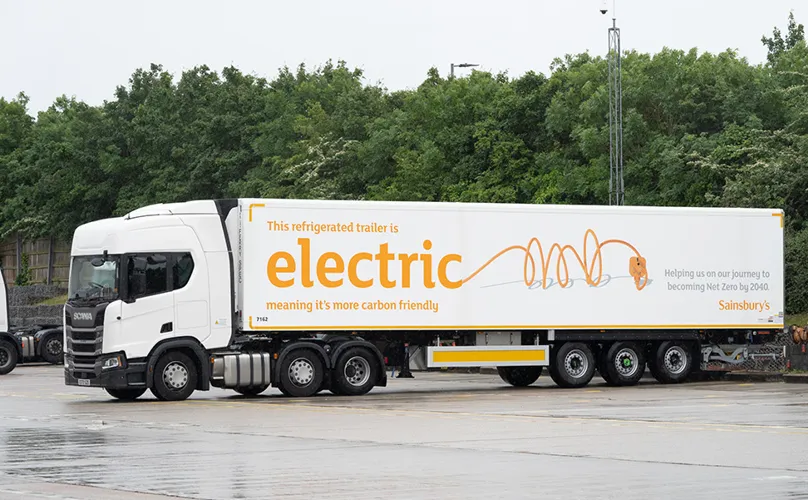
FPS modelled Sainsbury’s fleet of 1,276 HGVs, 1,792 trailers and 868 vans across more than 160k journeys. The result was a technically feasible pathway to net zero, with capital savings of more than £400k identified at larger commercial sites and £1m at HGV sites. Sainsbury’s is investing £1 billion over 15 years to be a Net Zero business across its own operations by 2035.

£1mcapital savings opportunity identified at HGV sites
£400k+capital savings opportunity identified at larger commercial sites
1,276HGVs, 1,792 trailers and 868 vans modelled
160k+journeys analysed
Impact
FPS gave Sainsbury’s:
- A technically feasible pathway to net zero that accounts for technology and operating change, with capital, operating, electricity and emissions impacts set out clearly
- Capital savings opportunities of more than £400k at larger commercial sites and £1m at HGV sites
- Peak load impacts and likely connection upgrade requirements at every site modelled
- A comparison of the case for EV and hydrogen adoption under current and future market conditions
- A flexible set of forecasts for tracking how changes to the pace of roll-out affect transition costs and emissions
The challenge
Transport fuel accounts for more than half of Sainsbury’s Scope 1 emissions. Sainsbury’s needed a pathway to net zero for its diverse fleet of HGVs and delivery vans.
The solution
FPS used its suite of Plan tools to:
- Combine Sainsbury’s operational and energy data in simulations of future fleet scenarios, quantifying the cost, feasibility and emissions impacts of EV adoption
- Identify the best vehicle and infrastructure strategies
- Test them under a range of business and technology pathways
- Produce an EV adoption strategy
About Sainsbury’s
Sainsbury’s is a leading UK supermarket with 600 supermarkets and over 800 convenience stores.